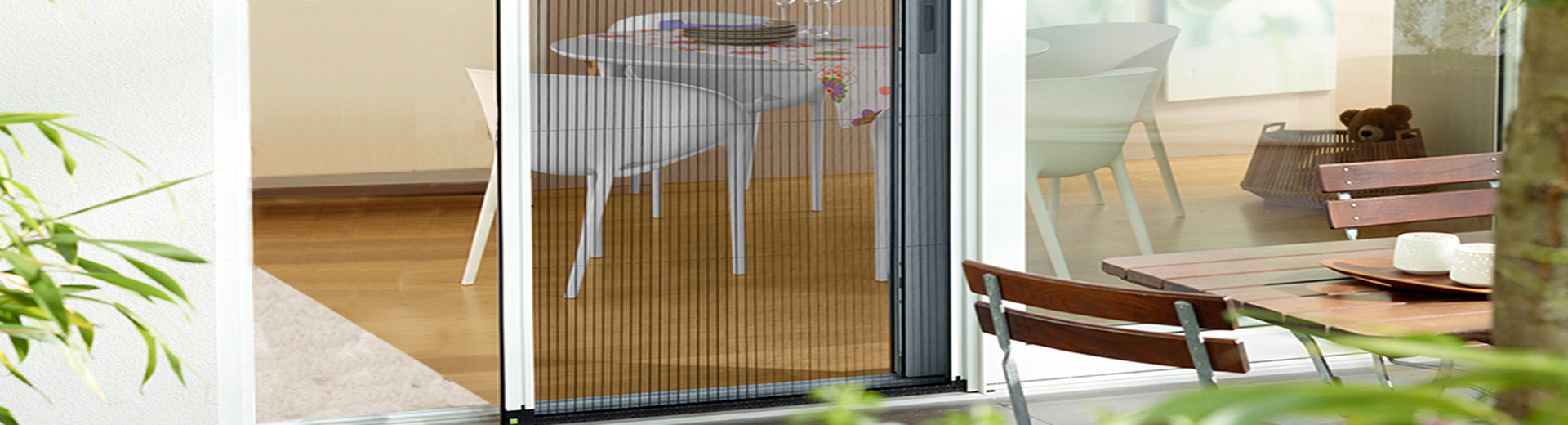
When Is an Electric Retractable Screen System Appropriate for Large Openings?
An electric retractable screen is most useful where a wide or tall opening makes manual operation awkward, or where several screens need to be operated regularly. A motor raises and lowers the mesh, allowing the opening to remain clear when insect protection is not needed. For exposed openings, check wind conditions before selecting the drive and screen assembly.
Where Motorization Makes Sense

Villas and covered terraces
Lower the mesh when insects are active and retract it when the terrace needs to be fully open.
Hotels and hospitality spaces
Staff can operate tall screens without reaching the pull bar. Grouped controls may be useful for separate terrace bays.
Commercial projects
Consider powered screens for sheltered seating areas and tall ventilation openings where manual operation is inconvenient.
For smaller, accessible openings with occasional use, a manual system may be more economical. Compare manual options in our retractable screen range.
How a Motorized Insect Screen Works
A vertical roll-up system winds mesh onto a roller inside the upper housing. The motor drives the tube, while side guides keep the moving screen aligned. A lower bar travels with the mesh as it extends and retracts.
The drive must be matched to the complete assembly, not simply the opening width. Tube diameter, mesh weight, bottom-bar weight and guide friction influence the motor load.
Upper and lower travel limits must be set during commissioning so the screen stops at its intended positions.

Specify the Span Before Selecting the Motor
The SO-01-205V motorized roll-up screen is a starting point for discussing large openings.
| Model detail | SO-01-205V |
|---|---|
| Frame and mesh | Aluminium profiles with PP mesh |
| Example size | 200 × 250 cm |
| Published maximum size | 500 × 300 cm |
| Supply format | Made-to-size finished unit |
| Finish | Confirm available finish for the order |
For wide installations, send us the finished opening dimensions and fixing details so we can check the proposed configuration. Maximum dimensions do not establish wind resistance.
For a long terrace frontage, compare a single wide unit with several smaller units separated by structural posts. Multiple bays can simplify independent operation and servicing, but intermediate supports must suit the architecture.
Motor and Power Requirements
| Specification | Why it matters | Information to agree |
|---|---|---|
| Motor torque and tube size | Determines the ability to lift the selected assembly. | Motor model and approved screen dimensions. |
| Supply voltage and frequency | Must match the destination market and building supply. | Rated voltage, frequency and wiring diagram. |
| Duty cycle | Repeated operation can heat the motor. | Permitted operating time and cooling intervals. |
| Environmental protection | Moisture and dust exposure vary by installation. | Motor and control enclosure ratings for the location. |
| Power interruption | A lowered screen may remain in position without power. | Recovery procedure and any available override. |
Arrange electrical supply and an accessible means of isolation before closing the ceiling or wall finishes. Electrical connection and protection should be specified by a qualified installer in accordance with local requirements.
Choose the Control Method Early
A handheld remote can be useful for a single patio bay. Hotels or larger residences may prefer a fixed control point or a building automation interface.
For smart-home integration, specify the existing control system and the commands it needs to send to the motor receiver.
For grouped operation, retain individual control where different bays have different operating needs. View our electric retractable screen systems for available configurations.

| Control option | Project question |
|---|---|
| Handheld remote | What receiver and channel arrangement are supplied? |
| Wall control | Which switch or control input is compatible? |
| Home or building automation | Is a gateway, relay or manufacturer-specific interface required? |
| Weather-triggered operation | Are compatible sensors available, and what behavior is configured? |
Remote control does not necessarily include Wi-Fi or obstacle detection. Request compatibility details for the selected drive.
Installation, Exposure and Safe Operation
Measure the structural opening, including the head space for the housing and the fixing surfaces on both sides. Keep the roller accessible for future servicing. Where screens are mounted outside, establish the expected wind exposure and whether the installation is sheltered.
Ask for the applicable operating wind limits and supporting test information before approving an exposed installation. Retract the screen when conditions exceed its approved limits. An insect screen is not a storm shutter, fall barrier or security door.
Keep the moving lower bar and guide area clear of people and objects. Where a screen crosses a frequently used passage, assess entrapment risks, control visibility and emergency access. Do not rely on obstacle detection unless that function is documented and verified. Required escape routes must remain usable, including during a power failure.
First-Unit Testing and Maintenance
- Check the housing and guides for alignment and secure fixing.
- Run the screen through its full travel and verify the configured stopping positions.
- Test each supplied control, including individual and group commands where specified.
- Verify the agreed power-loss recovery procedure and any documented protective functions.
- Record motor identifiers, settings and service access points for the maintenance team.
Remove debris from guides and clean the mesh according to the supplied care instructions. Isolate power before servicing moving or electrical parts. Ask which motor, receiver and mesh components can be replaced separately. For replacement components, quote the original model and motor reference when contacting us.
Request a Motorized Screen Quotation
Send your opening schedule
Send elevation drawings and the intended control arrangement to Flyziran. We can review the bay layout and discuss suitable motorized screen configurations.
Request Project Quotation- Width and height of each screen bay
- Headroom, fixing surfaces and service access
- Indoor or outdoor location and wind exposure
- Destination voltage and preferred control interface
- Quantity, finish, delivery schedule and spare parts
FAQ: Electric Retractable Screens
A five-metre span is within the published width limit of SO-01-205V, but the permissible height, supports and drive must be confirmed for the installation.
The installer must provide a supply compatible with the selected drive and local electrical requirements. Confirm the voltage, connection method and isolation arrangement before installation.
Integration can be discussed for the selected model. Confirm the motor and receiver interface, compatible gateway and required commands before purchasing.
Only within the approved operating conditions for the installed assembly. Request the wind limits and retract the screen when those limits may be exceeded.
No. Opening height, operating frequency, manual accessibility and installation cost all matter. A manual or divided screen arrangement may be more suitable.
Plan Power and Screen Fixings Before Finishing
Share your opening drawings before the headbox space and electrical routes are finalized.
Prepare Your Project RFQ